Science & Nature
4 Areas in Illinois Designated Critical Habitat for Rusty Patched Bumble Bee, Feds Announce
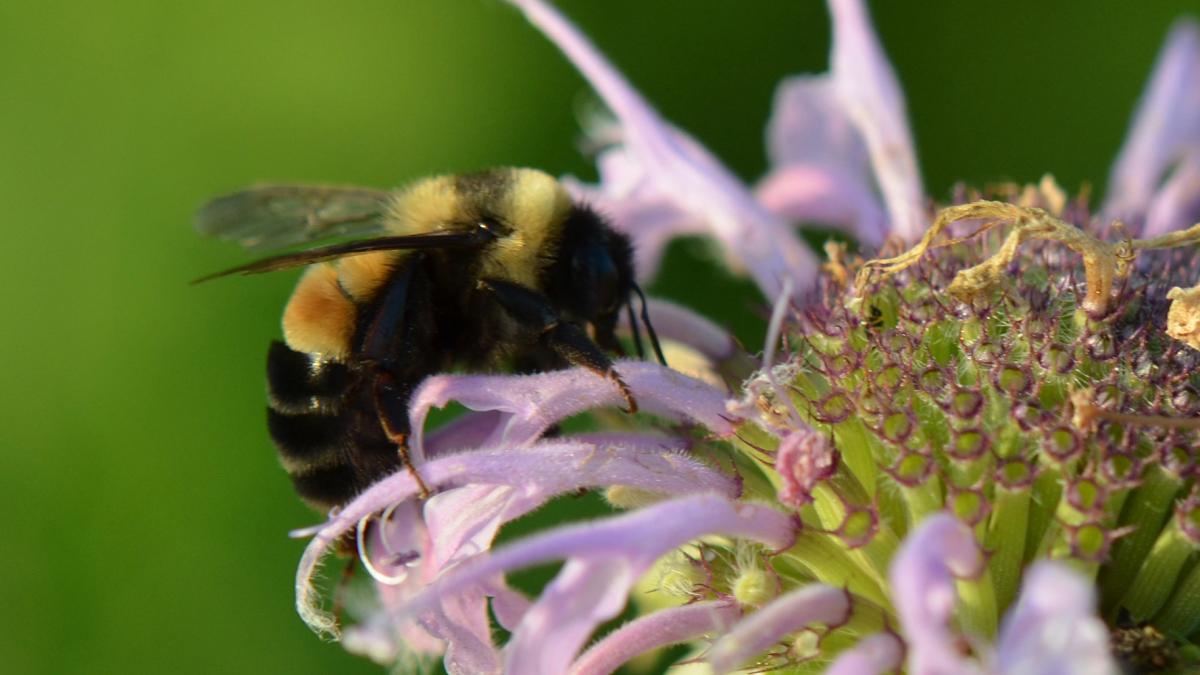 The rusty patched bumble bee, pictured here, was the first bee in the continental U.S. to receive an endangered species listing. (Courtesy U.S. Fish and Wildlife Service)
After nearly a decade of back-and-forth, the U.S. Fish and Wildlife Service (USFWS) has finalized its designation of critical habitat for the endangered rusty patched bumble bee (Bombus affinis), with Illinois among six states included in the ruling, the service announced Friday.
The designation is a win for conservation advocates, who sued USFWS over its initial decision not to assign critical habitat for the rusty patched when the bee was added to the federal endangered species list in 2017.
Once common across the eastern and midwestern United States, the rusty patched bumble bee has disappeared from nearly 90% of its range.
“Many of its native grasslands have been wiped out, so protecting its last remaining habitat from further destruction is just common sense,” said Lucas Rhoads, senior attorney at the Natural Resources Defense Council, which was a party to the lawsuit that forced USFWS’ hand.
The 1.57 million acres of critical habitat designated by USFWS cover portions of 33 counties in Illinois, Iowa, Minnesota, Virginia, West Virginia and Wisconsin. The bee’s strongholds include the greater metro areas of Chicago, Minneapolis-St. Paul and Milwaukee.
For the rusty patched, the benefits of critical habitat include public awareness of the presence of the species, as well as increased habitat protections from development or other disruptions.
In total, USFWS created 14 “units” of critical habitat for the rusty patched, four of which are in northern Illinois, totaling nearly 280,000 acres.
— Unit 9 consists of 130,668 acres in Boone, Ogle and Winnebago counties near Rockford. A sighting of the bee was one of the arguments conservationists made against the expansion of the Rockford Airport into Bell Bowl Prairie, a fight they ultimately lost.
— Unit 10 consists of 65,464 acres in McHenry and Lake counties in Illinois, and Kenosha County in Wisconsin, near McHenry, Illinois. This unit includes 39 acres of a conservation easement within the Hackmatack National Wildlife Refuge.
— Unit 11 consists of 69,761 acres in Cook, Kane, Lake and McHenry counties near Elgin, Illinois.
— Unit 12 consists of 12,643 acres in Lee and Ogle counties near Lost Nation, Illinois.
The designation will take effect at the end of June.
Contact Patty Wetli: [email protected]